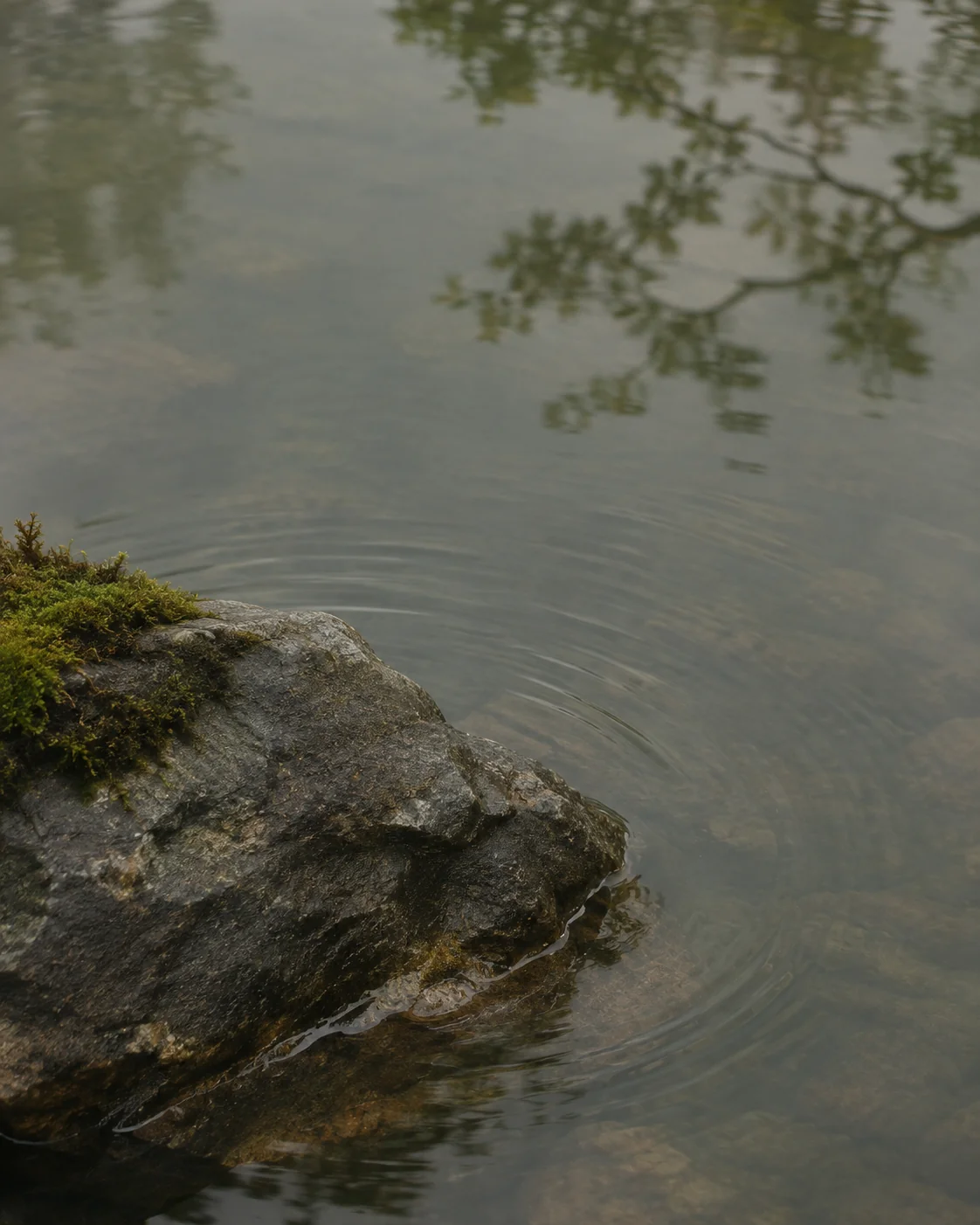
Nichinichi kore kōjitsu (日日是好日) is a Japanese reading of a Zen phrase commonly rendered in English as “Every day is a good day.” Its background lies in Chinese Chan Buddhism: Engaku-ji identifies it with the teacher Yunmen and the Blue Cliff Record. In the temple's explanation, a good day does not simply mean a day when events suit our wishes. Read Engaku-ji's explanation (Japanese).
That distinction matters when the words meet an actual day: the train you missed, the conversation that went badly, the afternoon that disappeared before you did what you intended.
You might reasonably ask: what could be good about this?
Where the saying comes from
In the account discussed by Engaku-ji, Yunmen asks his monks for a response concerning the days after the fifteenth, setting the earlier days aside. He supplies the answer himself: the phrase now known in Japanese as 日日是好日. The temple's commentary connects it with the value of an unrepeatable day, rather than favourable circumstances. Source: Engaku-ji, 10 May 2024.
This brief background is an introduction, not a complete explanation of the kōan. The reflection below is Zenterval's contemporary response to the saying; the questions are our own.
A way to meet the words today
Try beginning with a description instead of a verdict.
“I missed a deadline” describes something that happened. “The whole day was worthless” adds a judgement about everything else that happened, too.
There may still be a problem to address. An apology to make. Work to finish tomorrow. You can take those things seriously and leave room for another detail: someone held a door, lunch was warm, you stepped outside for a minute.
The detail does not cancel the difficulty. It gives you a more particular picture of the day.
You do not have to feel grateful on command. If all you can say is “today was hard,” start there. Let the sentence be honest before asking it to be hopeful.
Three questions to sit with
Choose one question. Write a sentence or two, or let it accompany you while you make a cup of tea.
1. What small part of today might you otherwise overlook?
Look for something specific. The sound of water in the sink. A familiar face. The patch of light that moved across your desk. An ordinary observation is enough; it does not need to become a lesson.
2. If today has been difficult, what would it mean to meet it without needing to fix it?
For these few minutes, you might name what happened and leave it on the page. You can return to practical decisions later. If the question does not fit today, skip it.
3. What changes when you set aside the question of whether a day was productive?
Consider what disappears when you count only completed tasks. Perhaps you listened to someone. Perhaps you rested. Perhaps the day was simply unfinished. Write what you notice without giving yourself a score.
Take one ordinary moment with you
Before you close this page, choose something you are about to do: wash a cup, open a window, walk to another room.
Give that act a little attention. Notice one detail before moving on.
There is no need to turn it into a perfect ritual. You can begin again with another ordinary moment tomorrow.
If you would like a little space for these questions, try Zenterval's free five-minute reflection. You can begin without signing up. Saving a reflection on the site requires email sign-in.
For a quiet reading to return to, you can also subscribe to the Sunday letter.
Editorial note: Historical background is paraphrased from the linked Engaku-ji commentary by Nanrei Yokota, “御朱印を書く,” dated 10 May 2024, checked 27 November 2026. The everyday examples and reflection exercises are original Zenterval editorial material. The three questions also appear in Zenterval's existing free experience. No affiliation with or endorsement by Engaku-ji is implied.